.png)
The Vital Role of Histological Stains in Cancer Research and Diagnosis
- Eghosa Arovo

- Apr 1, 2025
- 2 min read
Histological staining is a cornerstone in both cancer research and clinical diagnostics, enabling the visualization of cellular and tissue structures under a microscope. By applying specific dyes to biological tissues, researchers and pathologists can identify cellular abnormalities, tissue architecture disruptions, and the presence of malignancies. This article explores how various staining techniques contribute to cancer research and patient diagnosis.

The Importance of Histological Staining
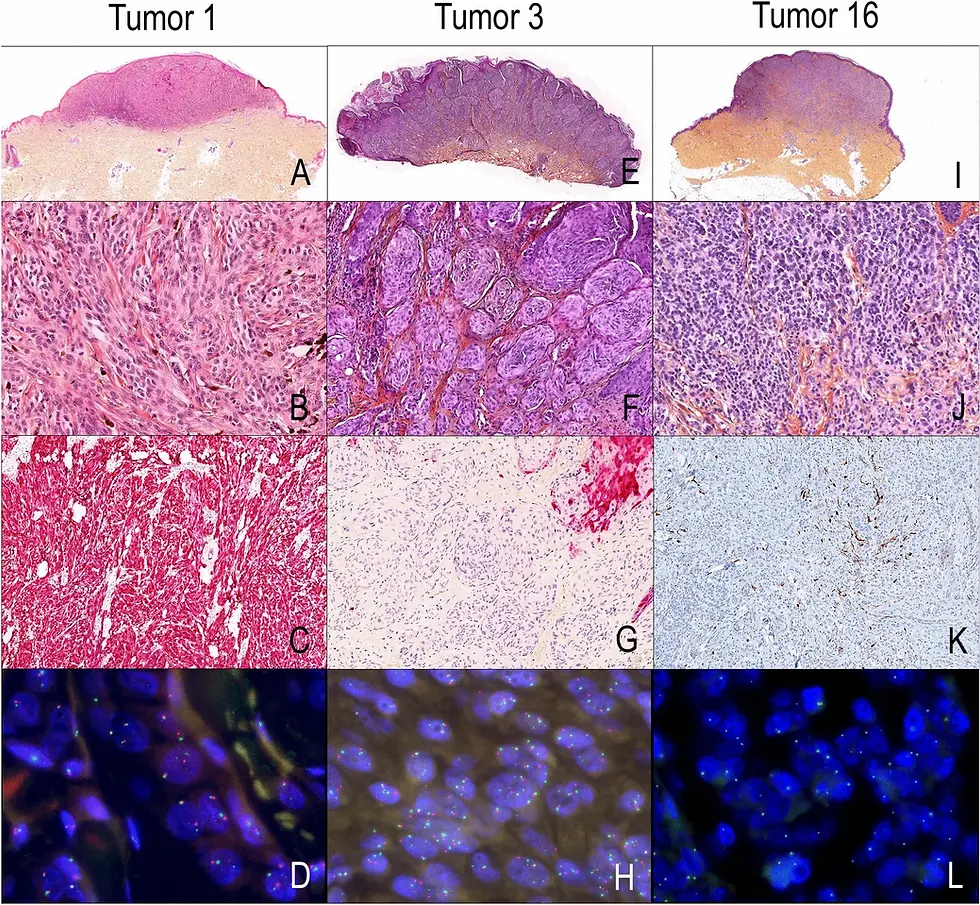
Histological examination is fundamental in diagnosing numerous pathological conditions, with staining being an essential component. Stains enhance the contrast between different tissue elements, allowing for the detailed visualization of cellular components and extracellular matrices. This enhanced visualization is crucial for identifying cancerous cells, understanding tumor morphology, and assessing disease progression. NCBI
Common Staining Techniques in Cancer Diagnostics
Hematoxylin and Eosin (H&E) Staining
H&E staining is the most widely used technique in medical diagnosis and is often considered the gold standard. Hematoxylin stains cell nuclei a purplish-blue, while eosin imparts a pink hue to the cytoplasm and extracellular matrix. This combination provides a clear view of tissue architecture and cellular details, facilitating the identification of structural abnormalities indicative of cancer. Wikipedia, NCBI
Immunohistochemistry (IHC)
IHC involves the use of antibodies to detect specific antigens in cells, allowing for the identification of proteins associated with particular cancer types. This technique is instrumental in diagnosing various malignancies, such as distinguishing between different forms of breast cancer by detecting hormone receptors like estrogen and progesterone. Wikipedia
Special Stains
Beyond H&E and IHC, several special stains are employed to highlight specific tissue components:
Perls' Prussian Blue: Detects iron deposits, useful in identifying hemosiderin accumulation.
Masson's Trichrome: Differentiates between collagen and muscle fibers, aiding in assessing fibrosis.
Periodic Acid-Schiff (PAS): Highlights glycogen and mucopolysaccharides, assisting in identifying certain tumors.
These stains provide additional layers of information, enhancing diagnostic accuracy.
Advancements in Staining Techniques
Recent developments have introduced multiplex staining methods, allowing for the simultaneous detection of multiple biomarkers within a single tissue section. This approach is particularly beneficial in complex cancer diagnoses, such as lung cancer, where preserving tissue samples is critical. Multiplex staining enables comprehensive analysis without the need for multiple biopsies, thereby improving diagnostic efficiency and patient comfort. Leica Biosystems
Conclusion
Histological stains are indispensable tools in cancer research and diagnosis, providing detailed insights into tissue morphology and cellular characteristics. The application of various staining techniques enhances the accuracy of cancer detection, informs treatment decisions, and ultimately contributes to improved patient outcomes. As staining methodologies continue to evolve, they promise to further refine our understanding of cancer and bolster diagnostic precision.
For comprehensive histology services and expert application of these staining techniques, LabNexus is dedicated to supporting your research and diagnostic needs.
Sources


Comments